
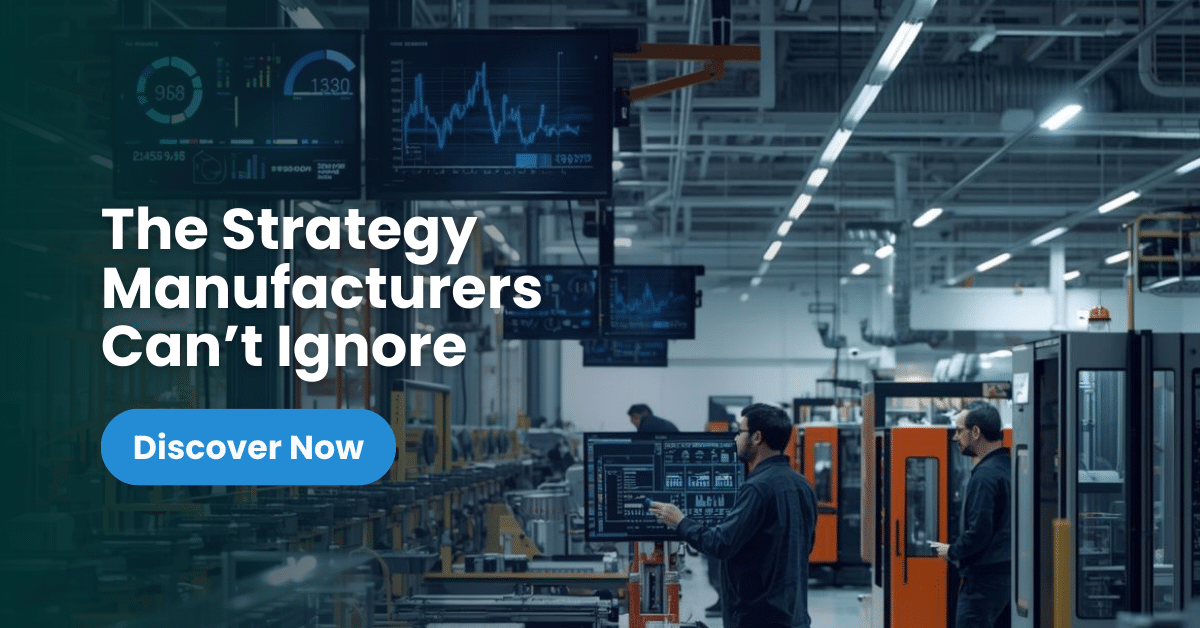
Walk into any modern factory and you’ll find advanced machines, automated lines, and massive ERP systems running in the background. Yet, despite all of this, senior leaders still struggle with the same questions:
- What is blocking today’s production?
- Can we commit this order without risking a delay?
- Is procurement aligned with actual consumption?
- Where is the bottleneck – material, capacity, or quality?
- What will break first if demand spikes next week?
These are not philosophical questions.
These are questions that should be answerable instantly.
But they aren’t – because most manufacturers don’t run their plants on live operational data. They run them on updates, assumptions, spreadsheets, WhatsApp groups, and late-night reconciliations.
This is where data-driven operations becomes a strategic advantage, not an IT upgrade.

The Reality: Manufacturers Have Data, But Not Operational Clarity
ERP is a system of record, not a system of operations.
ERPs store what has happened– not what is happening right now.
A plant producing 50–150 SKUs daily needs:
- Real-time production flow
- Inventory movement
- Quality holds
- Work-in-progress visibility
- Material consumption
- Queue status
ERPs can’t provide this granularity or speed.
According to a 2024 MESA Global Survey:
- 53% of manufacturing leaders say the biggest cause of delays is a lack of real-time visibility across departments.
- Nearly 40% of production losses come from misaligned planning and shop-floor execution.
The data exists – just not in one place, nor in a usable form.

What Data-Driven Operations Achieve
1. Order-to-Dispatch Transparency That Eliminates Surprises
When leaders see the entire order lifecycle in one cockpit, they eliminate decision latency.
With real-time visibility, plants see:
- Exact progress of each order
- Dependencies on material, machine, or manpower
- Quality blocks in real time
- Supplier delivery status
- Dispatch readiness and capacity
This shift leads to measurable impact:
- 23% improvement in OTIF (On-Time In-Full)
- 14–18% reduction in escalations
- Up to 30% reduction in production firefighting
(Industry Data: IDC Manufacturing Insights 2024)
Visibility is not a dashboard – it’s operational control.

2. Accurate Planning & Scheduling Without Guesswork
Planning teams usually operate with a 12–24 hour delay in data.
By the time they plan, reality has changed.
Data-driven planning solves this through:
Live machine loading:
Which machines are free, blocked, under maintenance, or overloaded?
Real-time inventory consumption:
What has been consumed vs. what is theoretically available?
Up-to-the-minute material flow:
Has material reached the shop floor or is it stuck in stores?
Immediate capacity management:
Can we take one more urgent order without risking commitments?
When planners work with this information:
- Idle time drops 15–25%
- Last-minute resets reduce by 35%
- Production sequencing becomes stable and predictable
This leads to a predictable manufacturing rhythm. Something many plants struggle with.

3. Demand-Synced Production Execution
Most production lines run on forecasts, not actual commitments.
This results in:
- Overproduction of low-priority SKUs
- Shortage of high-priority orders
- Excess WIP
- Production bursts followed by empty shifts
When production sees the actual sales order pipeline in real-time:
- Work order priorities become clear
- Line loading matches customer demand
- Cross-functional teams stop guessing
- WIP reduces because work is not queued unnecessarily
According to McKinsey (2023):
- Plants aligning production to real demand saw 11% improvement in delivery accuracy and 18% fewer stockouts.
Demand-synced execution builds customer trust and reduces internal chaos.

4. Smarter Procurement Through Operational Signals
Procurement teams are often unfairly blamed for shortages.
In reality, their biggest problem is delayed or inaccurate signals.
A data-driven operations layer gives procurement:
- Consumption rates
- Updated safety stock levels
- Production-linked demand
- Real-time supplier delivery performance
- Material movement insights
- Visibility into potential shortages 48–72 hours earlier
This early visibility helps procurement:
- Avoid emergency purchases
- Reduce over-ordering
- Improve supplier collaboration
- Negotiate based on actual usage trends
- Keep working capital under control
Gartner’s 2024 Supply Chain Report shows that procurement aligned with real-time operations reduces working capital by 10–15%.
Where KestrelPro Fits?
KestrelPro is built around one principle:
Operational clarity creates operational excellence.
It acts as a real-time layer over your existing ERP, connecting the dots across:
- Production
- Quality
- Inventory
- Procurement
- Sales
- Dispatch
What KestrelPro enables:
1. Unified Operations Cockpit
All departments operate with the same real-time truth.
2. Live Flow of Operations Data
Leaders no longer wait for updates – they see reality as it unfolds.
3. Cross-Functional Alignment
Silos collapse. Collaboration becomes effortless.
4. Precision Planning
Capacity, material, and order flows visible at all times.
5. Early Detection of Deviations
Bottlenecks are spotted when they form – not when they damage output.
6. Production Rhythm Stabilization
Daily operations become predictable, scalable, and reliable.
KestrelPro does not automate decisions.
It does something far more valuable –
It gives leaders complete situational awareness.
In Manufacturing, Clarity Is Power
Factories already have enough data.
What they lack is operational truth—the ability to see what’s happening, what’s at risk, and what needs attention right now.
Data-driven operations are not a trend.
They are the foundation of modern manufacturing leadership.
The manufacturers who can see more will always produce more, deliver more, and win more.